1. Introduction
The impact of climate change on the frequency and severity of physical hazards is putting many rural communities at risk. As the threat of climate change grows, so too does the need for accessible information, tools, and expertise to support climate-resilient decision-making across multiple scales, from communities to countries
| [13] | Dominick, D., Abigail, L., Abay, E., Jamie, C., Andrew, C., Abigail, F., Kelly, G., Carlos, Dobler., Patrick, F., David, M., Christopher, S. (2025). Climate Risk Assessment Ethiopia. Woodwell Climate Research Center. woodwellclimate.org. |
[13]
. Ethiopia, with its rich cultural heritage and a population of about 126.5 million (2023), faces growing climate challenges that also affect its economic priorities and natural resources
| [13] | Dominick, D., Abigail, L., Abay, E., Jamie, C., Andrew, C., Abigail, F., Kelly, G., Carlos, Dobler., Patrick, F., David, M., Christopher, S. (2025). Climate Risk Assessment Ethiopia. Woodwell Climate Research Center. woodwellclimate.org. |
[13]
. The country boasts a diverse range of climates, from tropical forests in the southwest to deserts in the north, and rain-fed agriculture forms the livelihoods of many rural communities, accounting for nearly 35% of the country’s GDP
| [13] | Dominick, D., Abigail, L., Abay, E., Jamie, C., Andrew, C., Abigail, F., Kelly, G., Carlos, Dobler., Patrick, F., David, M., Christopher, S. (2025). Climate Risk Assessment Ethiopia. Woodwell Climate Research Center. woodwellclimate.org. |
[13]
. Ethiopia also experiences the effects of increasing hazards, including climate variability and extreme events such as droughts, flooding, and landslides across different parts of the country
| [13] | Dominick, D., Abigail, L., Abay, E., Jamie, C., Andrew, C., Abigail, F., Kelly, G., Carlos, Dobler., Patrick, F., David, M., Christopher, S. (2025). Climate Risk Assessment Ethiopia. Woodwell Climate Research Center. woodwellclimate.org. |
[13]
. Currently, Ethiopian rural communities face significant vulnerability to the effects of recurrent drought due to their limited adaptive and mitigation capacity and heavy reliance on rain-fed agriculture-based livelihood systems. Drought, as a critical aspect of climate change, has become a more persistent disaster that gradually affects most rural parts of the country
. This intensifies rural population to deal with complex socio-economic, and environmental induced challenges, including poverty, food security, natural resource degradation, high population growth, and decline of agricultural production and productivity. However, all regions of the country are not equally vulnerable to the effect of recurrent drought.
The lowland arid part were considered to be the most drought-prone area, and relatively drier and receive much lower rainfall compared to other parts of the country, specifically the highland regions. Meanwhile, the country is one of the most poorer countries in the most poorest nation in the sub-Saharan region that makes highly prone to the effect of climate change induced drought. The most commonly identified effects of climate change in the country also include environmental hazards, deforestation, flooding, air and water pollution. The occurrence of drought in the country is unlike other sudden natural disasters, such as floods, landslides, and others; its impacts develop and aggravate slowly and are not immediately apparent
. According to the NAPA 2007 report, since a large part of the country is dry, sub-humid, semi-arid, and arid, they are vulnerable to the impacts of desertification, drought, famine, flood, malaria, livestock disease outbreaks, and soon
| [32] | NAPA. (2007). Ethiopia National Programme of Action, Official documents. |
[32]
. Specifically, recurrent drought, climate change, and flooding have become common phenomena and main developmental challenges that affect millions of rural people in the country. El-Niño-Induced atmospheric and oceanic processes often trigger drought in most rural parts of the country. Particularly in the northern, central, and eastern highlands, by affecting rainfall patterns and increasing temperatures, it resulted in severe food and water insecurity and affected millions of rural people. However, its impact is not uniform across all regions, with some regions experiencing flooding disasters while others face prolonged dry spells during the El-Niño phenomenon. In the country the impacts of El-Niño associated drought, include food and water scarcity, widespread crop failure that impacts the agricultural sector, and loss of livelihoods and essential resources that make rural communities more vulnerable to other interrelated shocks and stresses.
Despite, the impact of El-Niño varies across all areas, effective adaptation strategies were not tailored effectively to the local conditions, and specific vulnerabilities of the rural communities. As result recurrent occurrence of drought has remained the leading cause of disaster and human suffering, and its magnitude, frequency, and its effect have been increased since mid of 1970
| [2] | Amsalu Sena. (2019). Review on the Cause and Effects of Recurrent Drought on Ethiopian Agriculture Productivity. International Journal of Horticulture, Agriculture and Food science (IJHAF), Vol-3, pages 292-298, 1.
https://dx.doi.org/10.22161/ijhaf.3.5.7 |
[2]
. The severity and persistence of the recently occurred drought has produced a wide range of impacts across multiple sectors. Despite this, the agricultural sectors were taken as a core sectors to reduce this concern in the rural part of the country, and to bring sustainable development. Even though this sector have been challenged by consistent climate shocks, including drought were the most vulnerable to the impact of disastrous events. Agricultural production has been severely affected and there has been a significant reduction in crop production yield, and livestock population which are the mainstay of rural communities' subsistence, and livelihood systems. The occurrence of large population movements due to frequent drought has aggravated and compounded these miseries, often create disproportionate impacts across all regions of the
| [28] | McCarthy, J. J. (2001). Report of the Intergovernmental Panel on Climate Change. New York, USA: Cambridge University Press. |
[28]
. Most scholars have identified drought as an environmental hazard. Yet, the occurrence of drought characterized by a decrease in precipitation over a lengthy period. The rural part of the country often faces several types of shocks that threaten their well-being. Even, the adverse impact of drought is often associated with decreased household expenditures, distress sale of productive assets, and out-migration. All of these undermine rural peoples' short and long-term welfare status, and resilience
. However, the magnitude and likelihood of such negative impact have been shown to vary within affected rural populations due to differences in their vulnerability and cope-up capacity. Which depends on a given household's exposure to the drought shock, and ability to cope without compromising the long-term economic, social, and environmental consequences. Indeed, different households' vulnerability levels are affected by similar magnitudes of shocks and experience differently in their well-being outcomes
| [4] | Blaikie, P. (2014). At Risk: Natural Hazards, People’s Vulnerability and Disasters. Routledge, Abingdon-on-Thames. ISBN9780415252164. |
[4]
.
Critically understanding the real impacts of the realized drought disaster and their future likelihood need to be an important focus area for policy makers, and public and private development sectors. Since 2001 the persistent effect of drought on the long-term well-being of rural communities
| [49] | World Bank Group. (2025). Moving away from humanitarian appeals to managing drought in Ethiopia. |
[49]
has been identified. As well Devereux in 2008 noted that among the major environmental disasters, drought becomes the most frequent and catastrophic in the country, particularly rural areas where agriculture is the sole major livelihood system. Drought often causes substantial loss of income sources and seasonal food shortages. Which further aggravates rural communities' vulnerability to climate hazards. Since from 1980's, the frequency and impacts of drought in Ethiopia have increased. The top five catastrophic drought episodes that led to a high humanitarian crisis, and placed millions of rural people for emergency assistance, include 1972-74, 1983-84, 2002-03, 2010-11, and the 2015 droughts
| [11] | Dercon, S., Hoddinott, J., and Woldehanna, T. (2005). Shocks and consumption in 15 Ethiopian villages 1999 - 2004. Journal of African economics vol. 14. no 4, pp. 559 - 585. |
| [12] | Dercon, S. (2004) ‘Growth and Shocks: Evidence from Rural Ethiopia’, Journal of Development Economics 74 (2): 309-329. |
[11, 12]
. Understanding the real impact of drought catastrophes, particularly on household well-being has been the focus of many empirical studies. Among the various studies Alderman in 2006 estimated the impacts of drought on human capital, while Dercon in 2005 focused on household consumption, and primarily give due emphases on the multi-dimensional food security. Indeed, the focus on large-scale national drought disasters may arguably receive a high degree of intrinsic policy interest for the management of drought risks and emergencies. Estimated impacts of these studies however reflected the unique contexts of a particular drought episode as well as the country’s emergency management capability of the time. This review paper aims to examine and analyse changes in rural household’s exposure, vulnerability and the impacts of El-Niño-induced drought that causes a massive spike in humanitarian needs in the country. Specifically the study investigate causes and impacts of recurrent drought, policy gaps and limitation to build resilience rural community, importance of strengthening local communities capacity through community-driven initiatives and empowering local institutions Therefore, through examining and analyzing the gap and limitation of identified and selected most decent literature, this study critically discuss the effects of recurrent occurrence of drought on rural communities, and its causes and impact on the social, economic, environmental, and cultural well-being. Finally, it will discuss the effectiveness of drought adaptive mitigation national policies, and the inclusiveness of social protection schemes while addressing the impacts of drought across the rural part of the country.
2. Materials and Methods
2.1. Systematic Literature Review
For this review paper systematic review methods have been used to identify, collate, and systematically discuss, synthesis and analyze existing literature, including research findings, articles, books, and published and unpublished reports on the topic. The goals of the systematic review depend on the type of literature reviewed to answer specified as well as concentrated research questions. This is way systematic review method that can reduce the bias in the literature analysis
| [35] | Noyes J, Booth A, Moore G, Flemming K, Tunçalp O, Shakibazadeh E. (2019). Synthesising quantitative and qualitative evidence to inform guidelines on complex interventions: Clarifying the purposes, designs and outlining some methods. BMJ Glob Health. 2019; 4(Supplement 1): e000893. |
[35]
. On the other hand, systematic reviews serve multiple critical roles, including it provides syntheses of existing state of knowledge in the field from which future researchers can priorities can be identified
| [29] | Matthew J., Joanne, E., Patrick, M., Tammy, C. (2021). The PRISMA 2020 statement: an updated guideline for reporting systematic reviews. BMJ 2021; 372: n71.
http://dx.doi.org/10.1136/bmj.n71 |
[29]
. In which it can address questions that otherwise could not be answered by single study, it also identify problem in primary research that should be rectified to the future studies. As well it can generate or evaluate theories about how and why phenomena occurs to bring new insight to the existing literature.
For the purpose of this study systematic literature review enabled to identify, select, appraise, and synthesis studies while discussing and analyzing about the effect of El-Niño-Induced drought on rural communities’ disaster resilience, and sustainable development. Jesson, suggest that systematic reviews enable to clearly state purpose, questions, a defined research approach, and appraisal
| [25] | Jesson, J., Matheson, L. and Lacey, F. Doing Your Literature Review: Traditional and Systematic Techniques. 2011. Sage, London. |
[25]
. Therefore, following an explicit research methodology, the limitation of the traditional review approach shall be overcome. This limitation may include, biases of philosophical mix-ups through heterogeneous sampling
| [36] | Petticrew, M. (2001). Systematic reviews from astronomy to zoology: myths and misconceptions. BMJ (Clinical research ed), 322 (7278). pp. 98-101. ISSN 0959-8138
https://doi.org/10.1136/bmj.322.7278.98 |
[36]
, and issues related to quality assessment
| [8] | David, T., David, D., and Palminder, S. (2003). Towards a methodology for developing evidence-informed management knowledge by means of systematic review. Birtish Journal of management. Vol. 14, 207 - 222 (2003). |
[8]
. Indeed, to outline detailed road-map of the review process, including the rationale of the study, research questions, eligibility criteria, comprehensive search strategy, methods of study selection, data extraction, quality assessment, and data synthesis have been employed through below mentioned steps. That avoid the above-mentioned limitation, as well ensure transparent, completeness, and accuracy of the data of why the review was done. This enhance to critically discuss, syntheses and analyze how the multifaceted effects of drought on rural communities' well-being can be mitigated and addressed through an effective disaster mitigation policy and strategies via social protection mechanisms and strategies.
Phase 1: Mapping the Study Field Through a Scoping Review Method.
Conducted a systemic literature review to the scope of the amount of relevant material that has been carried out by identifying the most often cited texts and following up on the references therein. This gave the first impression of existing knowledge and knowledge gaps while analyzing the causes and effects of drought. Though performed a systematic search with Web of Science, SCOPUS, and PubMed using the following keywords (meteorological drought, hydrological drought, agricultural drought, drought adaptation, policy gap, and causes and effects). based on study population characteristics, drought exposure of rural communities, study design, and outcome of the review, the paper was limited to during and after the year 2005. This ensures the review process aligned with the recent studies consistent with contemporary trends in drought and climate-related research. As well-reviewed the grey literature using the same search terms in Google Scholar to ensure that all relevant articles were included.
Phase 2: Comprehensive Search
During this phase here entered into the systematic literature review by using the process described through searches in keywords, titles, abstracts, and some themes using Google Scholar with other combinations of the search terms; Aligned with the recurrent occurrence of drought-related research findings, including causes and effect on rural communities, mitigation policy and strategies, inclusiveness of social protection schemes. This enables to presentation comprehensive background of the literature within the topic to highlight new research streams by identifying gaps or recognizing inconsistencies for refining, focusing, and shaping the direction for further research.
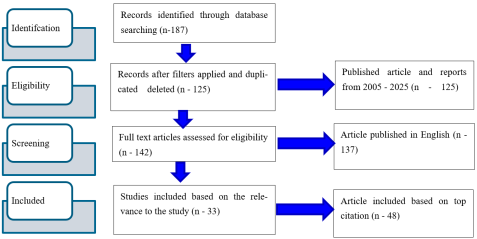
Figure 1. Study selection inclusion and exclusion criteria.
Phase 3: Quality Assessment
The search was subsequently limited to specific publications related to the recurrent occurrences of El-Niño-Induced Drought in Ethiopia. This have been undertaken through assessing selected studies relevance to the study research questions, scientific rigorousness and sound practicability, current relevance to the study topics, accessibility, and comprehensiveness in reducing the risks of biased during quality assessment.
2.2. Data Analysis and Interpretation
Selection Criteria: Initially the screened potentially relevant articles have been done based on the title, and abstract to determine if they meet the inclusion criteria for full-text review prior to detail discussion have been carried.
Phase 4: Data Extraction
The selected studies were analyzed along with the nature of the article (empirical or conceptual), analysis method, theoretical perspective, findings and results, definitions or propositions, and quality-related comments have been summarized. To identify the main categories of this review paper, the strategy was first to obtain a broad understanding of these identified articles, list the keywords of all of the selected articles, and summarize additional keywords by reviewing abstracts, introductions, and findings. Through grouping the keywords of the study able to identify first-order concepts, then continued by grouping these keywords into categories. Following the initial search, standardized forms were developed to extract the following data: (1) Study period, (2) study population, (3) study type, (4) concepts of drought, types of droughts, pattern, and trends of drought occurrence, (5) significant change in drought mitigation policies, (6) moderating or mediating variables, including drought exposure of rural communities, drought management policy framework, and effort to address the effects of drought.
Phase 5: Synthesis and Data Analysis
Following data extraction, the article divided into three categories focus on the occurrence of drought in the country, then sub-divided them based on drought mitigation measures. Then compared the result of those studies looking a similar metrics.
Phase 6: Write-up and Diffusion
The next section addresses the synthesis of the analysis of the study under the result and discussion of this article.
3. Results
3.1. Concept and Definitions of Drought
Drought virtually occurs across all climate zones across the country, but its characteristics vary significantly from one region to the other, as well the subjective understanding of of respective communities which depends on the dominant perception and the in which it defined. The concept of drought originates from a deficiency of rainfall precipitation over an extended period of seasons. In general term the concept of drought relatively defined to some long-term average conditions that occur in a particular area in which the conditions perceived as normal to that community. As well the concept of drought is also related to the timing, i.e. principal season of occurrences, or delays in the start of rainy seasons. Indeed, other climate factors, such as temperature, high wind, and lower relative humidity are often associated with the occurrence of drought. Based on the multi-disciplinary perspectives, where drought is related to precipitation (meteorological), stream flow (hydrological), soil moisture (agriculture), or a combination of the three, including socio-economic drought
| [14] | Dracup; wilhte; and Glantz. (1980), (Meteorological), (Hydrological), (Agricultural) Drought. |
[14]
. However, the concept of drought much broader, it can also define in terms of food shortage which leads serious human impacts, such as famine in severe cases. In fact, drought can be triggered by natural causes, including weather patterns, but increasingly they are caused by human activity, such as climate change, deforestation, agriculture, and high level of water demand.
3.1.1. Meteorological Drought
The concept of meteorological drought focuses on the degree of dryness in comparison to some normal duration of dry period. This definition of drought mainly emphasis on the departure of rainfall from expected amounts. Therefore, meteorological drought must be considered region-specific, since the atmospheric conditions that result in deficiencies of precipitation are highly variable from one region to another
| [14] | Dracup; wilhte; and Glantz. (1980), (Meteorological), (Hydrological), (Agricultural) Drought. |
[14]
. Literature review indicate that meteorological drought with its earlier onset is widely recognized as the origin of other types of drought prolonged below from the average precipitation, impairs soil moisture retention, lowers waters from lakes and rivers, and soon that intensifies agricultural and hydrological drought respectively
| [51] | Zhang, Y., Duan, J., Jian, Z. (2022) A daily drought index based on evapotranspiration and its application in regional drought analyses. P317-336. sci. CHINA sci., 65(2).
http://doi.org/10.1007/s11430-021-9822-y |
[51]
. Even though, the transition from one type of drought to another is termed as drought propagation which characterized through timing, duration, and intensity of its occurrence. This severely impacts rural livelihood systems, especially on rain-fed based agricultural practices of rural communities by causing crop failure, livestock loss, food insecurity, and forced migration.
3.1.2. Agricultural Drought
Agricultural drought mostly links the various characteristics of meteorological or hydrological drought to agricultural impacts focusing on precipitation shortages, differences between actual and potential evaporate-transpiration, soil-water deficits, and soon
| [24] | James, V. (2007) Drought Mapping, Assessment and Monitoring -2nd Asian Ministerial Conference on Disaster Risk Reduction, New Delhi. |
[24]
. This happen after the occurrence of meteorological drought while before hydrological drought. Most of agricultural drought types should be able to account for the susceptibility of crops during different stages of its development from early stage to maturity. According to this definition, deficient topsoil moisture at planting may hinder germination, leading to low plant populations per hectare and reduction of final yield, however, if topsoil moisture is sufficient at the early stage of plants, it may not affect final yield
| [24] | James, V. (2007) Drought Mapping, Assessment and Monitoring -2nd Asian Ministerial Conference on Disaster Risk Reduction, New Delhi. |
| [50] | Zinna. A and Surabhagavan. K. (2016). Remote senseing and GIS based spectro-agrometeorological maize yield forecast model for south Tigray, Ethiopia.
http://doi.org/10.4236/JGIS.2016.82024 |
[24, 50]
. This leads significant economic and social consequences impacting rural communities’ food security, economic stability, and the profitability of the agricultural sectors in which more than 80% of rural livelihood relies.
3.1.3. Hydrological Drought
Hydrological drought is mostly associated with the effect of seasonal periods of precipitation on surface or subsurface water supply i.e., stream flow, reservoir and lake or river level, and groundwater
| [46] | Wilhite D. A and M. H Glantz. (1985). ‘’understanding the drought phenomena; the role definition ‘’water international’’ (10): 111-120. |
[46]
. The frequency, and severity of hydrological drought is often defined on watershed or river basin scales
| [46] | Wilhite D. A and M. H Glantz. (1985). ‘’understanding the drought phenomena; the role definition ‘’water international’’ (10): 111-120. |
[46]
. Significant decline in water availability in surface and groundwater sources devastates rural livelihood system that threatening their food security. These types of environmental disasters force rural communities to adapt with strategies such as crop diversification, engage in non-farm activities, and migration often while coping with increased vulnerability due to limited access to assets, resources and financial capital.
Even though the occurrence of drought associated with meteorological, agricultural, and hydrological dimension in most rural parts of the country associated with the complex topography that creates diverse agro-ecological zones. The country agro-ecological zones are traditionally categorized as “Dega” (cool, humid highlands), “Woina-Dega” (cool, sub-humid mid highland), “Kolla” (warm, semi-arid lowland), and “Bereha” (hot, arid lowland) with diverse climate variability. Despite, predominantly rain-fed based agricultural practices of rural people makes vulnerable to the effect of recurrent drought in which exacerbated by change in climate, and large - scale climate oscillations like climate variability. Lowland regions of the country often considered as drought prone, whereas upper and mid-highland areas, and humid areas mostly become drought hot-spots depends on climate patterns. This signifies a critical consideration and needs for context specific drought adaptation and management policies and strategies aligned with rural communities’ livelihood systems and recovery mechanism.
3.2. Drought Risk Adaptation
Ethiopia has established a strong policy landscape for climate action through several strategies initiatives. This has been demonstrated by national government commitment to address climate futures through embracing the Sendai framework for disaster risk reduction and incorporated resilience principles into its first national determined contribution to the UNFCCC
| [13] | Dominick, D., Abigail, L., Abay, E., Jamie, C., Andrew, C., Abigail, F., Kelly, G., Carlos, Dobler., Patrick, F., David, M., Christopher, S. (2025). Climate Risk Assessment Ethiopia. Woodwell Climate Research Center. woodwellclimate.org. |
[13]
. In addition, the country outlined its commitment to sustainable development through key policy framework, including the ten- year development plan of 2021 - 2030, the Climate Resilient Green Economy Strategy (CRGE), and the national adaptation plan (NAP), aimed at mitigating risks associated with climate change and environmental degradation
| [13] | Dominick, D., Abigail, L., Abay, E., Jamie, C., Andrew, C., Abigail, F., Kelly, G., Carlos, Dobler., Patrick, F., David, M., Christopher, S. (2025). Climate Risk Assessment Ethiopia. Woodwell Climate Research Center. woodwellclimate.org. |
[13]
. Drought is mostly considered a natural phenomenon that often impacts people, the economy, and ecosystems. Prolonged recurrent occurrences of drought reduce food production and water availability and at their worst lead to significant human suffering and loss of life. It hurts ecosystem functions, reduces social, political, and economic stability, and can increase vulnerability to another natural disasters, such as heat waves and floods
| [6] | Cressman, K. (2008). The use of new technologies in desert locust early warning. Outlooks on Pest Management, 19(2), 55–59. |
[6]
. The Horn of Africa Dryland is increasingly experiencing severe drought, which imposes a threat on traditional livelihood strategies, understanding adaptation behavior in rural communities is the key to helping reduce the impact of drought.
Recently, international, and regional initiatives have changed the way how the recurrent occurrence of drought is assessed and managed. However, historically drought has been viewed as a natural phenomenon to which rural society responds with a reactive crisis management approach that deals only with the symptoms of drought
| [6] | Cressman, K. (2008). The use of new technologies in desert locust early warning. Outlooks on Pest Management, 19(2), 55–59. |
[6]
. This approach has proven to be highly inefficient, because it creates a culture of dependency, and offers few incentives for changing how land and water resources are managed to reduce future drought impacts. Still yet, drought is more often viewed as a natural event that requires society to take a proactive preparedness approach to reduce societal and rural communities' vulnerability and to increase resilience capacity. As with any natural disaster, addressing drought should not focus only on managing the crisis, but also needs to encompass the full cycle of disaster management
| [6] | Cressman, K. (2008). The use of new technologies in desert locust early warning. Outlooks on Pest Management, 19(2), 55–59. |
[6]
.
3.3. Drought Management Policy Framework
According to Crossman in2018, emerging from many initiatives over the last twenty years, but especially since 2013 a strong advocacy for developing national drought management policies, which establish a clear set of principles and operating guidelines to govern the management of drought, and mitigate its impacts
| [6] | Cressman, K. (2008). The use of new technologies in desert locust early warning. Outlooks on Pest Management, 19(2), 55–59. |
[6]
. Therefore, the national drought management policy should take a risk management approach that applies measures to prepare for, adapt, and mitigate drought impacts. Despite this, the absence of local knowledge, and stakeholders' input represents a substantial gap in the proposed national drought management policy framework
| [38] | Tadesse Shimeles. (2024). Critical Review of the "Drought Monitoring Map for Ethiopia": Strategic Insights for Enhancing Drought Management Framework.
https://doi.org/10.13140/RG.2.2.30558.75841 |
| [43] | United Nations Convention to Combat Desertification (UNCCD), the Food and Agriculture Organization of the United Nations (FAO), and the World Meteorological Organization (WMO). (2013); High-Level Meeting on National Drought Policy (HMNDP) CICG, Geneva 11-15 March 2013 Science Document: Best Practices on National Drought Management Policy. |
[38. 43]
. Incorporating community-based observations, and indigenous knowledge would enhance the accuracy and relevance of drought monitoring efforts, by fostering strong partnerships with local rural farmers, community leaders, and Regional, and Zonal planners could improve the practical application and efficacy of the drought management policy framework
. This enables and supports the development of comprehensive drought monitoring, and early warning systems for better communication and dissemination of information on drought onset, and risks
| [6] | Cressman, K. (2008). The use of new technologies in desert locust early warning. Outlooks on Pest Management, 19(2), 55–59. |
[6]
. indeed, the drought management policy framework of the country should empower rural community action that changes and reduces risk and enhances their resilience capacity. Given Ethiopia's geographical, and climatic diversity, the drought management and monitoring framework must be adaptable to different regional contexts. Tailoring the strategies to address the specific vulnerabilities, and needs of various regions would greatly enhance the effectiveness of the framework, and ensure its broader application on the ground across all areas of the country
.
Even though no single policy, action, or sector-specific action can't achieve this by itself, due to drought is a complex phenomenon that is temporally, and spatially diffused, requiring multiple indicators to measure its impact, and an array of actions to reduce its risks
| [6] | Cressman, K. (2008). The use of new technologies in desert locust early warning. Outlooks on Pest Management, 19(2), 55–59. |
[6]
. Therefore, reducing drought risk requires a multi-pronged approach, and supporting policy framework that embraces the principles, and goals of drought resilience, and disaster management. Coherently organized policy framework into logical groupings with a wide variety of potential approaches, and actions effectively reduce recurrent occurrence of drought risk in the rural communities, in the meanwhile increase resilience. A coherent, and integrated drought resilience and management policy framework would avoid fragmented, and uncoordinated investment in land, water, and socio-economic systems
| [6] | Cressman, K. (2008). The use of new technologies in desert locust early warning. Outlooks on Pest Management, 19(2), 55–59. |
[6]
. As well the policy framework should also recognize that drought impacts and associated risks can have interconnected effects on multiple sectors, including health, water, environment, education, agriculture, and livelihood systems, and soon.
According to IPCC, and Crossman in 2018, the drought resilience, adaptive, and management policy (DRAMP) framework takes an integrated, multi-pronged approach in reducing risk, and the impacts of drought
| [33] | Neville, D. (2018). Drought Resilience, Adaptation and Management Policy (DRAMP) Framework. |
[33]
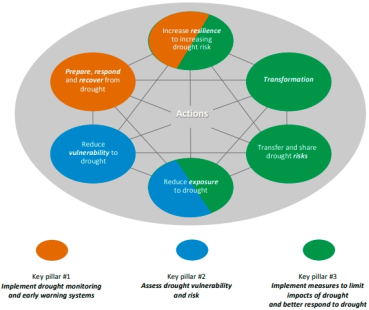
. Which is organized around six cross-cutting goals, in which the DRAMP framework identifies programmatic actions for countries to better prepare, and respond to drought, and guides the design, and implementation of drought policy at the national to sub-national level, as shown below figure.
Figure 2. The Drought Resilience, Adaptation and Management Policy (DRAMP) framework adapted from IPCC in Crossman, 2018.
As shown in the above figure, the six goals of the DRAMP framework are not mutually exclusive, the six goals of DRAMP framework are described as follows:
Reduce Exposure to Drought: This goal intends to reduce the potential for loss of people, livelihoods, ecosystem services and resources, infrastructure, as well as economic, social, and cultural assets in places that could be adversely affected by drought.
Reduce vulnerability to drought: This goal of the DRAMP framework focuses on reducing the tendency to be adversely affected by drought.
Increase resilience to drought risk: This goal focuses on strengthening the ability of communities, ecosystems, and the economy to anticipate, absorb, accommodate, or recover from the effects of drought quickly, and efficiently by ensuring the preservation, and restoration for the improvement of natural capital.
Transformation: To alter fundamental attributes of social, economic, and ecological systems, including value systems, regulatory, legislative, or bureaucratic regimes, financial institutions, and technological systems.
Prepare, respond, and recover from drought: The backbone of management, and planning approaches to reduce drought risk, including development of comprehensive drought monitoring, and early warning systems.
Transfer, and share drought risks: Distribute risks among wider sections of society to include those who benefit directly and indirectly from robust drought risk management.
Yet the DRAMP national framework lacks inclusiveness to build drought resilience capacity of rural communities. This mainly due to limited engagement of key actors of local communities, and non-state actors, including NGOs, research institutions, community- based organizations, and other development entities who can significantly influence through their roles in resource use, policy design, implementation of policy and strategies. This undermines coordinated collective efforts to build rural resilience against drought impact. These entities can enhance the effectiveness of DRAMP through playing key major roles, like in influencing decision making processes at global level that can support national and local initiative, provide essential scientific knowledge and co-create sustainable development pathway with local stakeholders, design and implement gender sensitive adaptation strategies and advocate priorities of affected rural communities, and in strengthen collective action through establishing community based social network and cooperation for resource mobilization and adaptive policies and strategies implementation. Therefore, to establish effective and broadly applicable DRAMP requires strong coordination and alignment of decision making process and action among actors at various levels from local vulnerable community to international development entities.
4. Discussion
4.1. Rural Community Vulnerability to Climate Induced Disasters
For several decades the country has been vulnerable to the effect of climate change induced disasters that affect the economic, social, cultural and environmental wellness of most rural communities. In which the overall live and livelihood system highly rely on climate-sensitive economic sector i.e. agriculture that makes it more vulnerable to man-made and natural disasters. According to World Bank Group 2025 report nearly 22.4 million rural people were affected by diverse disastrous. Between 2009 and 2024, much of the Ethiopian highlands spent less than 10% of the time (<18 months) in a food insecurity crisis. The lowlands, on the other hand, have experienced significantly more food insecurity. The northern half of Afar, eastern Oromia, and most of Somali have seen crisis-level, or worse, food insecurity 50%–60% (8 years) or more of the time between 2009 and 2024
| [13] | Dominick, D., Abigail, L., Abay, E., Jamie, C., Andrew, C., Abigail, F., Kelly, G., Carlos, Dobler., Patrick, F., David, M., Christopher, S. (2025). Climate Risk Assessment Ethiopia. Woodwell Climate Research Center. woodwellclimate.org. |
| [41] | Ruth, R. V., and Porter. C (2017). Vulnerability to Drought and Food Price Shocks: Evidence from Ethiopia.
https://doi.org/10.1016/j.worlddev.2017.02.025 |
[13, 41]
. Eastern portions of Amhara as well as South Ethiopia have also experienced crisis-level food insecurity between 20% (~3 years) and 40% (~6.5 years) of the 18 years analyzed. At the same time recurrent food insecurity cannot be attributed solely to drought conditions, as multiple factors often interact
| [13] | Dominick, D., Abigail, L., Abay, E., Jamie, C., Andrew, C., Abigail, F., Kelly, G., Carlos, Dobler., Patrick, F., David, M., Christopher, S. (2025). Climate Risk Assessment Ethiopia. Woodwell Climate Research Center. woodwellclimate.org. |
[13]
. Economic, social, and political factors also play critical roles. Nevertheless, the significant impact of drought remains undeniable. For example, the 2020–2022 conflict in northern Ethiopia demonstrates how instability further exacerbates food insecurity. While a meteorological drought is a moment in time, the communities affected by drought continue to feel the impacts as infrastructure, markets, and social systems work to rebuild
| [13] | Dominick, D., Abigail, L., Abay, E., Jamie, C., Andrew, C., Abigail, F., Kelly, G., Carlos, Dobler., Patrick, F., David, M., Christopher, S. (2025). Climate Risk Assessment Ethiopia. Woodwell Climate Research Center. woodwellclimate.org. |
[13]
.
4.2. The Cause and Effects of Recurrent Drought
There is highly growing concern evidenced that much of Sub-Saharan region natural base and its ecological habitat are deteriorating at most alarming rate. This is manly due to significant loss of vegetative cover resulting from deforestation and conversion of Savannah to cropland
| [42] | UNECA, (1993): United Nations Economic Commission for Africa (1993). Relationship between Population and Environment with Particular Reference to Mortality in Selected ECA Member States. United Nations-Department of Technical Cooperation for Development (1990). Workshop in Population and Development, Uganda 11-15 October 1988, Proceedings and Recommendations. |
[42]
. This leads to high level of vulnerability to the effect of drought. The country, Ethiopia has long history to the effect of climate change, which greatly contributes to land degradation and recurrent drought. The high dependency of rural communities on scarce natural resources and rainfall associated with shortfall and its erratic nature resulted in widespread drought and famine
| [1] | Alderman, H., Hoddinott, J., & Kinsey, B. (2006). Long Term Consequences of Early Childhood Malnutrition. Oxford Economic Papers, 58(3), 450–474. |
| [45] | Tagel Gebrehiwot and Anne van der Veen. (2013); Assessing the Evidence of Climate Variability in the Northern Part of Ethiopia. |
[1, 45]
. Moreover, rapidly growing population pressure and forest loss to the needs of rural population basic agricultural farmland demand, including food and energy made the rural farmland and soil susceptible to the effect of wind and water erosion which in turn bring the occurrence of drought and climate change. In addition to this, the combined effect of deforestation, overgrazing, expansion of cropping and grazing farmland, and unsustainable use of natural resources further contributes to rural communities land degradation.
Among the main contributory factors for the deterioration of Sub-Saharan region environment, drought is one of the utmost important disasters associated with the effect of climate variability
| [5] | Brian C. Thiede. (2023). Climate Variability and Internal Migration to Urban and Rural Areas: Evidence from Global Microdata. |
| [10] | Demeke A. B., Keil, A., Zeller, M. (2011). Using panal data to estimate the effect of rainfall shocks on smallholders food security and vulnerablity in rural Ethiopia. Climate Change. Vol 108. no. 1-2, pp, 185 - 206. |
| [40] | Stefan, D. (2005). Vulnerability and Shocks in 15 Ethiopian Villages, 1999-2004.
https://doi.org/10.4314/eje.v15i1.39818 |
[5, 10, 40]
. This causes insatiability in the production and productivity of agricultural sector. The key reasons for the fragility of rural agricultural activities were climate change and high dependence on rain-fed based agricultural practices. Almost all rural communities agricultural practices characterized by two rain based growing seasons. Despite, in recent year due o the effect of climate change that has been avert the recurrent occurrence of drought shocks in the rural areas, and caused severe cereal crop harvest failure and loss of livestock. This leads to adverse impact on rural households immediate consumption needs, as well poverty persistence to rural household’s livelihood system. The occurrence of drought seasons were mostly associated with very low food grain and livestock production. Failure in the agricultural sector caused by severe drought, warming temperature, rainfall pattern change could diminish the availability of water for both crops and livestock, as well shorten crop growing seasons. Decreasing rainfall, and increase in the frequency of extreme weather, and drought have an immediate and direct effect on the agricultural sectors
| [2] | Amsalu Sena. (2019). Review on the Cause and Effects of Recurrent Drought on Ethiopian Agriculture Productivity. International Journal of Horticulture, Agriculture and Food science (IJHAF), Vol-3, pages 292-298, 1.
https://dx.doi.org/10.22161/ijhaf.3.5.7 |
[2]
.
The Global Facility for Disaster Reduction, and Recovery Report 2011 noted that drought impact including rural livestock pasture shortages, overgrazing, land degradation, decreased water availability, and livestock disease outbreaks leads to greater risk to the rural communities' survival to the effect of drought
| [19] | GFDRR. (2011). The Global Facility for Disaster Reduction, and Recovery Report. |
[19]
. The impact significantly decreased livestock production and productivity, crop failure, food insecurity, and increased conflict over scarce resources. The recurrent occurrence of drought not only brought a loss of life, famine, and hardship to the natural inhabitants but also threatened the country's future as children aged five or less are 36% to 50% respectively more likely to be malnourished. As well it has also caused famine in parts of Somalia region and killed tens of thousands of people in recent years. This is due to the impact of agricultural production and productivity decline, including lower yield in both crop and livestock production, increased livestock deaths, land degradation, and soil erosion
| [2] | Amsalu Sena. (2019). Review on the Cause and Effects of Recurrent Drought on Ethiopian Agriculture Productivity. International Journal of Horticulture, Agriculture and Food science (IJHAF), Vol-3, pages 292-298, 1.
https://dx.doi.org/10.22161/ijhaf.3.5.7 |
[2]
. Its impact on human health, includes an increased risk of food and water shortages, increased risk of malnutrition, and higher risk of water and food-borne diseases
| [2] | Amsalu Sena. (2019). Review on the Cause and Effects of Recurrent Drought on Ethiopian Agriculture Productivity. International Journal of Horticulture, Agriculture and Food science (IJHAF), Vol-3, pages 292-298, 1.
https://dx.doi.org/10.22161/ijhaf.3.5.7 |
[2]
. While its impact and rural communities' exposure and vulnerability vary across all regions of the country.
4.3. Trends of Drought in Ethiopia
Drought mostly described as a dry period in the climate system caused by the lack of rainfall that can occur anywhere in the world
| [21] | Getachew. M, Jaya. P, Millica. S, and Rogert. S. (2024). The phenomena of drought in Ethiopia: Historical evolution and climate force. http://doi.org/10.2166/nh.2024.192 |
[21]
. Its frequency and severity can produce devastating effects on agriculture, environment, economy, as well as energy sector and human health
| [1] | Alderman, H., Hoddinott, J., & Kinsey, B. (2006). Long Term Consequences of Early Childhood Malnutrition. Oxford Economic Papers, 58(3), 450–474. |
| [21] | Getachew. M, Jaya. P, Millica. S, and Rogert. S. (2024). The phenomena of drought in Ethiopia: Historical evolution and climate force. http://doi.org/10.2166/nh.2024.192 |
[1, 21]
Among the Sub-Saharan countries, Ethiopia has experienced many severe droughts in the history of the past six decades, and nearly a total of 30 disastrous droughts have been occurred that significantly affected a million of people
| [3] | Bayissa, A., Moges, S., Xuan, Y., Van Andel, S., Maskey, S., Solomatine, D., Van Griendven, A and Tadelle, T. (2015). Spatio-temporal assessment of meteorological drought under the influence of varying record length: The case of upper Blue Nile Basin, Ethiopia. http://doi.org/10.1080/02626667 |
[3]
across all regions of the country. Even though, most recently the occurrence of drought in the country rapidly increasing
once every 2 - 3 years. This indicate that a high risk as the social, and economic system of most rural communities largely dependent on rain-fed agriculture which account for approximately 49% of the country GDP that employ nearly 80% of the country’s population
| [7] | CSA. (2014). Central statistical agency of Ethiopia, Agricultural sample survey. |
[7]
.
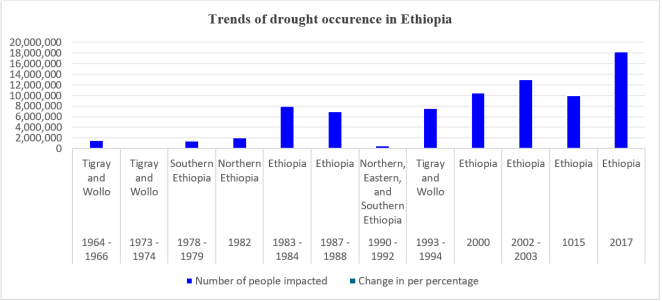
Table 1. Trends of drought occurrence and its impact across multiple regions since 1964 - 2017 (source: World Bank report, 2017).
Drought occurred years (EC) | Regions Affected | Number of people impacted | Change in per percentage |
1964 - 1966 | Tigray and Wollo | 1,500,000 | 1.8% |
1973 - 1974 | Tigray and Wollo | 200,000 | 0.25% |
1978 - 1979 | Southern Ethiopia | 1,400,000 | 1.75% |
1982 | Northern Ethiopia | 2,000,000 | 2.5% |
1983 - 1984 | Ethiopia | 8,000,000 | 10% |
1987 - 1988 | Ethiopia | 7,000,000 | 8.76% |
1990 - 1992 | Northern, Eastern, and Southern Ethiopia | 500,000 | 0.6% |
1993 - 1994 | Tigray and Wollo | 7,600,000 | 9.5% |
2000 | Ethiopia | 10,500,000 | 13% |
2002 - 2003 | Ethiopia | 13,000,000 | 16% |
1015 | Ethiopia | 10,000,000 | 12.5% |
2017 | Ethiopia | 18,200,000 | 22.8% |
Figure 3. Trends of drought occurrence and its impact across multiple regions since 1964 - 2017 EC (source: World Bank report, 2017).
4.4. Drought Exposure of Rural Community
The drought that occurred in the year (2015 - 2016) in the country has been one the worst that the rural communities experienced in decades
| [17] | FDRE. (2016). Federal Democratic Republic of Ethiopia, Ministry of Labour and Social Affair; National Social Protection Strategy of Ethiopia. |
[17]
. Its magnitudes were at least comparable to the historical episodes of droughts that caused dramatic food crises in the mid-1970s and 1980s climate variability is known to contribute to drought conditions in Ethiopia. The 1972 and 1884 droughts were the most severe and affected almost all administrative regions
| [47] | Wolde-Georgis, T. (1997). Climate change and drought early warning in Ethiopia. Internet Journal of African Studies 2 (2), 10. |
[47]
. Studies such as done by Degefu in 1987 documented evidence that the occurrence of these most devastating droughts in Ethiopia is linked to the occurrence of El-Niño events in the Pacific Ocean
| [9] | Degefu, W. (1987). Some aspects of meteorological drought in Ethiopia. In M. H. Glantz (Ed.), Drought and hunger in Africa: Denying famine a future (pp. 23–36). Cambridge University Press. |
[9]
. In the meanwhile, in 2015 one of the highest sea surface temperatures (SST) was recorded in the Pacific Ocean, during which Ethiopia experienced one of the worst drought episodes over the decades. The 2015 - 2016 drought caused a huge failure of the two main rainy seasons' agricultural yield. The crisis time-line associated with humanitarian needs is reported in the official humanitarian document of the country released in 2016. Even small changes in rainfall patterns directly affect the agricultural- based livelihood system of rural communities, damaging crops and reducing yields. In a worst-case scenario, this could lead to a famine that kills more than a million people. The drought of 1983–1984 is still fresh in the memories of many Ethiopians, as it claimed the lives of more than 8,000,000 people and damaged millions of livestock
as compared to 2017 drought which affect nearly 18,200,000 rural people. According to the National Drought Mitigation Centre - NDMC 2015, drought affected all aspects of the environment, and rural communities, and the impact grouped as economic, environmental, and social
| [34] | NDMC. (2015). National Drought Mitigation Center, 2015/3310, Types of drought impact. |
[34]
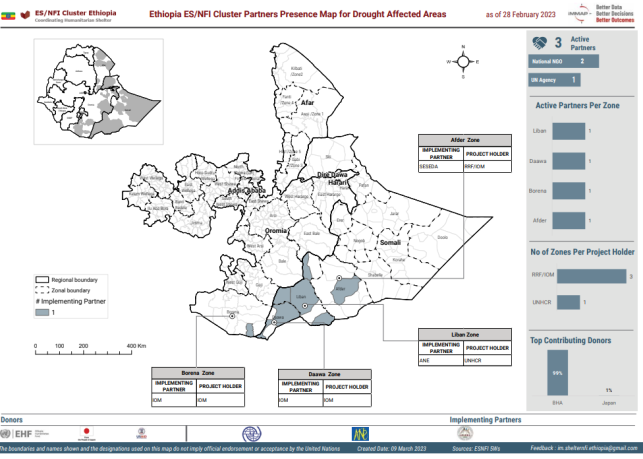
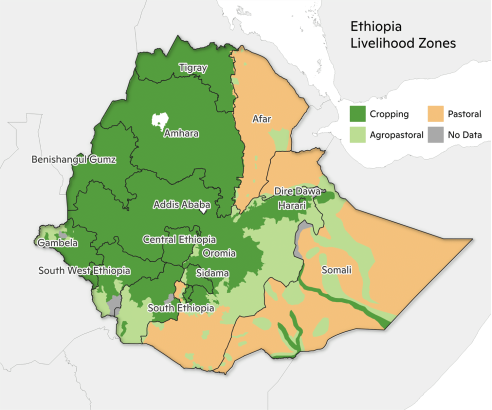
. Getachew 2018 noted, the country exhibits significant regional variations in drought proneness, with the eastern regions, including the Afar and Somali regions and the lowland areas of Oromyia and South Ethiopia, being particularly escarpment of the Ethiopia rift valley also facing frequent droughts
. Eastern and South-eastern regions are mostly characterized by arid and semi-arid climates with low rainfall which makes them highly susceptible to drought
. Further the lowland area of Oromiya and south Ethiopia regions experience frequent droughts, particularly affected pastoral communities
| [44] | UN-OCHA. (2023). Ethiopia ES/NFI Cluster partners presence map for drought affected area. |
[44]
. This implies the in-adequateness of drought mitigation policy and strategies while addressing the effect of drought on rural communities' well-being. The policy also lacks due consideration of the community-based disaster resilience approach which hinders its effectiveness in dealing with the effects of recurrent drought.
Figure 4. Ethiopia ES/NFI Cluster partners presence map for drought affected area (source UN-OCHA, 2023).
4.5. Impacts of Drought on the Socio-economic and Ecological Well-being
4.5.1. Economic Impacts
According to the Minister of Agriculture 2019, Ethiopia is one of the fastest-growing economies in sub-Saharan Africa, and the economy continues to grow impressively
| [30] | Minister of Agriculture. (2019). Ethiopia Country Programming paper to end drought emergency in the Horn of Africa. |
[30]
. Even though poverty remains a major challenge in rural areas in both highland and lowland context making the country highly vulnerable to a wide range of climate change-induced natural as well man-made disasters. In recent years the occurrences of drought in the country rapidly increased as compared to the most recent decades
. This represents high economic risks, as the economy of Ethiopia is largely dependent on rain-fed agriculture which accounts for approximately 49% of the national GDP
| [21] | Getachew. M, Jaya. P, Millica. S, and Rogert. S. (2024). The phenomena of drought in Ethiopia: Historical evolution and climate force. http://doi.org/10.2166/nh.2024.192 |
[21]
. According to World Bank report 2024 drought significantly impacts the country GDP by damaging its heavily rain-fed agricultural sector which is crucial for the livelihood of rural communities and country export earnings
| [48] | World Bank report, (2024) Trends of drought occurrence and its impact across multiple regions since 1964 - 2024. |
[48]
. While recurrent climate change induced droughts are projected to reduce cumulative GDP by up to 17% by 2040. This leads to reduced agricultural productivity, lower investment, increased inflation, and food insecurity which disproportionately affecting rural and poor population. This economic impacts of droughts cost rural people's lives and household assets. This includes farmers losing assets if drought destroys their crops, as well water supply too low the farmer may have to spend more money on irrigation and drilling new wells, and businesses that depend on farming like companies that make lose their business. When drought damages crops and livestock, people who work in the timber industry may be affected when wildfires destroy stands of timbers, power companies that normally rely on hydroelectric power created from the energy of running water may have to spend more money on other fuel sources, and the power companies’ customers would also have to pay more
| [34] | NDMC. (2015). National Drought Mitigation Center, 2015/3310, Types of drought impact. |
| [42] | UNECA, (1993): United Nations Economic Commission for Africa (1993). Relationship between Population and Environment with Particular Reference to Mortality in Selected ECA Member States. United Nations-Department of Technical Cooperation for Development (1990). Workshop in Population and Development, Uganda 11-15 October 1988, Proceedings and Recommendations. |
[34, 42]
. The drought that occurred between 2015/2016 significantly damaged the livelihood and economy of most rural communities across several regions, specifically the south-eastern, central, and north-western parts of the country in which mitigation action is undertaken under disaster risk management policy and strategic framework unable to address this concern for several years.
4.5.2. Environmental Impacts
The impact of drought on the environment may vary in different ways, plants and animals depend on the environment like humans heavily vulnerable. According to NDMC 2015 finding when drought occurs rural communities food supply sources significantly shrink that lead to damage to local environmental habitat
| [34] | NDMC. (2015). National Drought Mitigation Center, 2015/3310, Types of drought impact. |
[34]
. Sometimes the damage could be only temporary, and habitat and ecological food supply return to normal specifically when drought season over. Among the most severe impacts of drought that have occurred most recent years in the country on the environment, include loss or destruction of wildlife habitat, lack of food and water for wild animals, intensification of wild animals' diseases, migration of wildlife, increasing stress on endangered species even extinction, wind and water erosion as well as poor soil quality
| [34] | NDMC. (2015). National Drought Mitigation Center, 2015/3310, Types of drought impact. |
[34]
. Annually an estimate of 1 billion tons of net soil are lost across the country due to erosion, with over 2 million hectares facing irreversible degradation. This intensified the ecological damage in which most rural communities live and the livelihood system highly depends.
4.5.3. Social Impacts
In addition, the economic and environmental impact of drought which occurred in the year 2015 - 2017 EC also affected rural people's health, and safety. This includes public safety and health, aggravating resources-based conflict, and lifestyle change. The social impact may include anxiety or depression about economic losses, health problems related to access to clean water, a threat to public safety from an increased number of forests, and a range of fires, as well as fewer recreational activities become a common treat of drought in the rural parts of the country
| [2] | Amsalu Sena. (2019). Review on the Cause and Effects of Recurrent Drought on Ethiopian Agriculture Productivity. International Journal of Horticulture, Agriculture and Food science (IJHAF), Vol-3, pages 292-298, 1.
https://dx.doi.org/10.22161/ijhaf.3.5.7 |
[2]
. The recurrent occurrence of drought in the country affecting nearly tens of millions of rural people by causing widespread food insecurity, displacement, and malnutrition. In the meanwhile, millions are pushed into poverty due to crop failure and livestock deaths. Further, it has direct and indirect consequences on rural communities' traditional social institutions which serve as one of the community's drought resilience strategies and cope-up mechanisms. Despite, addressing the economic, environmental, and social impact of drought is immensely hindered by the adequacy and effectiveness of effort measures undertaken through government and other development entities.
Figure 5. Drought and its impact in Ethiopia (source: Dominick et al., 2025).
4.6. Effort to Overcome Drought in Ethiopia
The occurrence of natural hazards are inseparable part of human life and have existed continuously since the creation of mankind
| [23] | Hajarian, A. (2025). Meteorological Drought Risk Monitoring and Zoning Using Random Forest Model (Case Study: Ardabil Province). Journal of Drought and Climate change Research (JDCR), 3(9), 83-94.
https://doi.org/10.22077/jdcr.2025.8551.1093 |
[23]
. Unexpected and sudden natural events that causes the weakening and destruction of economic, social, and cultural capabilities, including loss of life and property, destruction of infrastructure, and financial resources in society considered the major disaster. Preparing drought risk maps and assessing the susceptibility of its basin can improve the preparedness of rural communities and reduce the effects of drought through mitigation and adaptation plan at national, as well as local level
| [23] | Hajarian, A. (2025). Meteorological Drought Risk Monitoring and Zoning Using Random Forest Model (Case Study: Ardabil Province). Journal of Drought and Climate change Research (JDCR), 3(9), 83-94.
https://doi.org/10.22077/jdcr.2025.8551.1093 |
[23]
. Historically drought response strategies in Ethiopia have evolved from primarily reactive measures such as food aid and livestock support to incorporating more proactive strategies including access to improved water management and livelihood diversification. In, the most recent year the productive safety net program (PSNP) is the key mechanism along with emergency assistance and climate resilient agriculture. For the last few consecutive decades, the country highly experiencing the effects of climate change. Besides the direct effect it has such as an increase in average temperature and change in rainfall patterns. Even though, climate change also presents the necessity, and opportunities to switch to a new, sustainable development model. As result government of Ethiopia initiated climate resilient green economy (CRGE) strategies to protect rural communities from the adverse effect of climate change related risks. Through building green economy the initiative expect to contributes to the realization of its ambition of reaching middle income status
| [16] | FDRE. (2011) Green Economy Strategy. Federal Democratic Republic of Ethiopia: Climate Resilient Green Economy Strategy. |
[16]
. According to the country sustainable development strategies to address the impact of recurrent drought through DRM, particularly in the pastoral and agro-pastoral regions are being linked to integrate sustainable development via utilizing scarce natural resources that can create interconnection among different sectors to ensure fair and equitable use and management of resources taking into consideration of the demand and benefits of future generations. This can contributes to rapid and sustainable social, and economic development of the nation through sound development strategies. Mitigating the impacts of drought, and other natural hazards stands among the priorities of the country's natural resource management policies
| [31] | Ministry of Finance and Economic Development (MOFED). (2010). Growth and Transformation Plan. |
[31]
. The general counties development program framework (2010 - 2050) expressed four strategic objectives, these include achieving a sustainable increase in agricultural productivity and production, accelerating agriculture commercialization and agro-industrial development, reducing degradation and improving the productivity of natural resources, and achieving universal food security, and protecting vulnerable rural households from the effect of natural disaster including drought. Even though this effort that has been undertaken by concerned government entities at the national and regional levels fails to address the catastrophic drought that occurred in 2015/2016. This is mainly due to the inadequateness of the drought mitigation policy framework, resource limitations to deal with the issues, and rural communities’ vulnerability and resilience strategies.
4.7. Drought Mitigation Social Policy
Due to the complexity of drought phenomenon, simple drought indices cannot properly describe the relationship exist between climatic conditions, topographic, and anthropogenic factors that affect the natural phenomenon
| [23] | Hajarian, A. (2025). Meteorological Drought Risk Monitoring and Zoning Using Random Forest Model (Case Study: Ardabil Province). Journal of Drought and Climate change Research (JDCR), 3(9), 83-94.
https://doi.org/10.22077/jdcr.2025.8551.1093 |
[23]
. To reduce the effects of drought and improve management, its is very essential to develop a spatial framework for identifying drought-prone areas various scales
| [23] | Hajarian, A. (2025). Meteorological Drought Risk Monitoring and Zoning Using Random Forest Model (Case Study: Ardabil Province). Journal of Drought and Climate change Research (JDCR), 3(9), 83-94.
https://doi.org/10.22077/jdcr.2025.8551.1093 |
[23]
, as well to incorporate under mitigation and adaptation actions. Among Sub-Saharan African countries, Ethiopia is one of the most frequently drought-affected countries in the region. Within the last few decades, the country has experienced frequent disasters, including drought, flooding, disease outbreaks, and soon. This is significantly associated with the effects of climate change which has a greater incidence and severity of environmental disasters, and extreme weather events. Within the country, small-scale rural producers relying on rain-fed agriculture are the most exposed to climate-related hazardous events, and at the same time, are the least able to cope with its effects
| [52] | Zougmore, R., Partey, S., Ouedraogo, M. et al. (2016). Toward climate-smart agriculture in West Africa: a review of climate change impacts, adaptation strategies and policy developments for the livestock, fishery and crop production sectors. Agric and Food Secur 5, 26 (2016).
https://doi.org/10.1186/s40066016-0075-3 |
[52]
. Therefore, reducing rural communities' smallholder climate-related vulnerability is the key priority to ensure their food security, and livelihood. Despite this, most of the existing literature reveals that, the capacity to make the required adjustments critically depends on the drought mitigation policies and strategies while supporting rural communities' access to early warning information, credit services, insurance, market, technology, and supportive extension services.
Indeed, for the last few years, more attention has been given to leveraging social protection measures to improve the adaptive capacity of rural vulnerable households
| [52] | Zougmore, R., Partey, S., Ouedraogo, M. et al. (2016). Toward climate-smart agriculture in West Africa: a review of climate change impacts, adaptation strategies and policy developments for the livestock, fishery and crop production sectors. Agric and Food Secur 5, 26 (2016).
https://doi.org/10.1186/s40066016-0075-3 |
[52]
. As a consequence, terms such as; Adaptive Social Protection (ASP), and shock-responsive social protection have been forged to refer to the adaptive role of social protection
| [15] | FAO. (2021). Food and Agricultural Organization of United Nation Reducing vulnerability to weather shocks through social protection Evidence from the implementation of Productive Safety Net Programme (PSNP) in Ethiopia. |
| [43] | United Nations Convention to Combat Desertification (UNCCD), the Food and Agriculture Organization of the United Nations (FAO), and the World Meteorological Organization (WMO). (2013); High-Level Meeting on National Drought Policy (HMNDP) CICG, Geneva 11-15 March 2013 Science Document: Best Practices on National Drought Management Policy. |
[15, 43]
. Social protection may help to build the resilience of rural poor, and vulnerable households by investing in their capacity to prepare for, cope with, and adapt to shocks. In this way, social protection is proposed to complement and support other emergency intervention programs. The country's productive safety net program (PSNP), is one of the notable examples of which have been implemented through social protection schemes. Social safety net programs are designed to meet the social protection needs of the most rural vulnerable while reducing the risks associated with disaster. Multiple studies assessed the impacts of the PSNP program on rural agriculture productivity, including the use of inputs, agricultural investments, and management strategies, gender-related vulnerabilities
| [37] | Rebecca, H., Nicola, J., Fouzia, M., Rosana, V., Yisak, T., and Tassew, W. (2010). Addressing gendered risks and vulnerabilities through social protection: examples of good practice from Bangladesh, Ethiopia, and Peru.
https://doi.org/10.1080/13552074.2011.592637 |
| [43] | United Nations Convention to Combat Desertification (UNCCD), the Food and Agriculture Organization of the United Nations (FAO), and the World Meteorological Organization (WMO). (2013); High-Level Meeting on National Drought Policy (HMNDP) CICG, Geneva 11-15 March 2013 Science Document: Best Practices on National Drought Management Policy. |
[37, 43]
, and resilience to climate
| [26] | Knippenberg, Erwin, Hoddinott, J. (2017). 'Shocks, social protection, and resilience: Evidence from Ethiopia', ESSP Working Paper. Addis Ababa Ethiopia: International Food Policy Research Institute (IFPRI) and Ethiopian Development Research Institute (EDRI).
https://hdl.handle.net/10568/148272 |
[26]
. While other studies focused on the implementation features such as institutions and people's preferences. However, important knowledge gaps remain on the mechanisms that guide the impact of PSNP on households' adaptive capacity to climate shocks associated with drought. Yet, it is unclear whether PSNP only impacts the program participants or whether the effect of the program is also transmitted to non-beneficiaries through a set of possible indirect channels. As well it intends to reduce households' vulnerability to climate shocks or other types of shocks.
4.8. Policy Gaps and Limitations
The impacts of drought are multi-pronged and their management requires strong multi-sectoral collaboration. A strong and comprehensive connecting institutions is indispensable to enhance coordination among development partners in carrying out long-term activities towards grass root level drought resilience building. The national social protection policy describes social protection broadly as part of the social policy framework. It focuses on reducing poverty, social, and economic risks of rural peoples' vulnerability and exclusion by taking measures through formal, and informal mechanisms to ascertain accessible, and equitable growth for all. This entails providing social assistance to enhance access to basic social services, expand the coverage of social security services, enhance the availability of gainful livelihood opportunities, and soon. Even though, it lacks active grass root level community participation and involvement in the design, planning, execution/implementation, and review and evaluation process of the social protection schemes adequateness to address and mitigate the impacts of drought. Which hider the overall effectiveness of the policy in addressing the recurrent occurrences of drought and its interrelated socio-economic and environmental problems of rural communities. In addition, the policy didn’t incorporate accurate use of early warning information which mainly relies on sector departments for technical data, which at times are not reliable. At the same time, though, ensuring the accuracy of data and understanding it in the sector departments is critical if the right conclusions are to be drawn and activities planned accordingly to mitigate the concern of drought. Moreover, there is usually a time gap between information about impending drought threats provided by the response to the government act. Furthermore, the DRAMP framework undermine the role of diverse actors’ collaboration in drought adaptation strategies through public-private-civil society partnership, leveraging local communities’ knowledge and indigenous adaptation mechanisms to implement integrated policies, build capacity, and ensure inclusion, effectiveness, and resilient response to drought at all levels.
4.9. Rural Community Drought Resilience
Rural community's drought resilience highly depends on multiple factors, including their economic and social assets, and social protection policy and strategic framework adopted by concerned government and other development entities. These significantly determine communities' disaster response mechanism before, during, and after the occurrence of disastrous events. For the last several years most rural peoples' drought resilience capacities have deteriorated rapidly due to the effects of multifarious man-made and natural disasters that occurred in almost all regions of the country. This includes climate change and variability, disease outbreaks, conflict, flooding, landslides, and failure of crop and livestock production and productivity among others. This intensified and aggravated rural peoples' vulnerability and exposure to the multiple effects of recurrent drought. The livelihood systems in which rural villagers rely on natural resources also contribute either to building drought resilience livelihood systems or coping strategies. Even rain-fed agricultural practices that rural people's livelihood strategies seasonally depend affected by drought-induced crop disease infestation, the decline in crop yields, livestock disease outbreaks/and losses, and soon.
Indeed, social policies and strategies that have been designed and implemented to build rural communities' drought resilience capacity are mainly covered through social protection schemes. Among these safety net programs (PSNP) is the one that has been established in almost all parts of rural areas to build the economic, social, and environmental resilience of rural villagers to the effects of hazardous events. This program has brought significant change to local communities' disaster management systems. Even though, the program is unable to adequately mitigate recurrent drought occurrences, as well as to bring sustainable impact in building communities resilience strategies. This implies that the policy and strategic framework from which the program derived has a limitation in terms of improving rural people's resilience strategy and mechanism. Therefore, the social protection policy strategy and program schemes need to be much more inclusive through integrating and establishing local community institution-based social protection and welfare systems and disaster risk management with the national disaster management policy, strategic framework, and program to action.
5. Conclusions
Drought is a complex and slowly encroaching natural hazard. It causes significant and pervasive socio-economic and environmental impacts. It is known to cause more deaths and displace more people than any other natural hazard. Despite it is not exclusively an issue of developing countries: severe droughts have occurred in developed countries in recent years. However, the damages are magnified when placed in the context of less developed or developing countries. Where not only ecological and economic damages are triggered but livelihoods and often human lives are threatened. The drought that occurred in the year 2015 - 2017 EC created huge damage to the lives and livelihoods of rural Ethiopia, primarily affecting the northeast, central, southwest, and eastern parts of the country. Specifically, Afar, Somali, Amhara, Tigray, Oromyia, and south-western pastoral and agro-pastoral communities. Drought in fragile contexts is also associated with social unrest and local conflict, depending on the underlying socio-economic and political settings in which it occurs. Furthermore, (recurrent) droughts resulting in conflicts in already poor areas of politically fragile developing regions may not only lead to forced migration which is much more characterized in Amhara, and Tigray regions. This also runs drought risk to become a breeding ground for insurgences, extremism, and terrorism across borders. With climate change, drought is projected to increase in severity, frequency, duration, and spatial extent in all regions of the country. National governments and the international community have very often underestimated the need for longer-term drought resilience initiatives in the rural parts of the country. Possibly the immediate mastering of droughts in rich countries and the constant availability of sufficient food through international trade and food aid has lulled governments to address the root causes of drought. Responses to drought by governments are generally reactive and poorly coordinated and have been typically characterized by "crisis management". Lately, the increasing severity, frequency, and spatial extent of droughts − and their severe consequences for lives, livelihoods, and security (including conflicts and migration) in rural communities which in a globalizing world are felt more intensely than before − have raised serious global concerns and revitalize interests towards better risk-management policy framework, and strategic approaches concerning tackling the effects of droughts.
As drought mitigation strategies national government has been implementing a wide range of social protection schemes, including a productive safety net program (PSNP) across all regions of the country. Even though the strategy adopted to address this rural community's deeply rooted vulnerability to the effect of drought has fallen to address for the last several decades. Even though the national social protection policy framework and program schemes focus on multiple rural communities' resilience activities, they lack inclusiveness, and active grass root level community participation and involvement in the design, execution/implementation, and review and evaluation process of the policy framework, strategies, and program schemes adequateness to address and mitigate the recurrent occurrence drought. Indeed, the finding of this study contribute and provide new insight and understanding for policymakers, practitioners, and future researchers, as well as rural development public and private entities as a steeping ground for policy revision, further studies, and future disaster risk management and resilience building intervention programs. As per synthesis of this study the following key recommendation were made which need to be considered while revising the policy framework;
1) Create enabling environment for the active participation and engagement of diverse range of development actors through establishing collaborative platform during DRAMP framework design process.
2) Incorporate local communities’ drought adaptation indigenous knowledge and practices in policy framework, and social protection programs and projects schemes.
3) Establish strong and sustainable public-private - civil society partnership and cooperation among stakeholders within the policy framework.
4) Integrate rural communities’ resilience building multiple intervention activities with DRAMP strategies and modalities to bring long-lasting impact.
5) Periodically monitor, review, evaluate, and revise the effectiveness of the policy framework.




 Share This Article
 Twitter
 Linked In
 Facebook
 Copy
Copy Download